
24-Hour Dispatch
Call the BoatUS dispatch center anytime day or night at 800-391-4869, 365 days a year for boat towing assistance. Our dispatch centers are strategically stationed on both the Atlantic and Pacific Coasts.
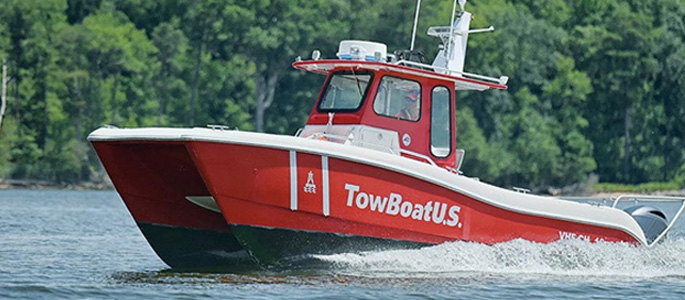
A BoatUS Unlimited Towing Membership is the best value & lowest-priced towing service available. Take TowBoatUS with you on the water!
No out of pocket expense for towing in an unlimited service area.An Unlimited Service Area is up to a minimum of 25 miles from the responding TowBoatUS Port. Many TowBoatUS Companies offer larger Unlimited Service Areas to meet the need of their boating community. View your local towing company's Unlimited Service Area here.
No out of pocket expense for soft ungrounding in an unlimited service area.For soft ungroundings within an Unlimited Service Area, a BoatUS Unlimited Towing Membership pays for the cost per foot fee billed by the towing company.
Towing bills with rates of $250/hour or more!The average daytime hourly rate for a commercial towing company is $300 from the time they leave their dock until they return. That amount goes up for service provided at night or in bad weather. A BoatUS Unlimited Towing Membership would handle these expenses.
Soft ungrounding fees of $20/foot or more!Towing Companies charge an additional per foot fee to unground your boat in addition to the hourly rate. The BoatUS Unlimited Towing Membership would handle this expense.
For those who want 100% of their towing bill paid for from your homedock to a repair facility, BoatUS Unlimited Gold Towing Membership is the level to go with.
Basic Membership
per year
24/7/365 Dispatch
Serviced by TowBoatUS, the Nation's largest fleet
Over 25 benefits and services
Service good on all boats you own, borrow or rent
Opportunity for free enrollment as a West Advantage Gold Rewards Member, earning the highest level of rewards at West Marine
Unlimited Freshwater Towing Membership
per year
Basic Membership, Plus:
BoatUS pays 50% for dock-to-dock tows for repairs
Reimbursement up to $2,500 for tows outside of TowBoatUS service area
Service for all inland lakes, rivers and waterways (excluding Florida)
-
-
MOST
POPULAR
Unlimited Saltwater Towing Membership
per year
Basic Membership, Plus:
BoatUS pays 50% for dock-to-dock tows for repairs
Reimbursement up to $2,500 for tows outside of TowBoatUS service area
Service for all waterways, coastal and inland (including all of Florida)
-
-
Unlimited Gold Towing Membership
per year
Unlimited Saltwater Towing Membership, Plus:
BoatUS pays 100% for dock-to-dock tows for repairs
Reimbursement up to $3,000 for tows outside of TowBoatUS service area
-
-
-
One push of a button connects you and provides our crew your location. FREE for all boaters!
Use your cell phone to call the closest TowBoatUS Company listed in our online service locator.
Key your VHF mic and hail "TowBoatUS."
24-Hour Dispatch
Call the BoatUS dispatch center anytime day or night at 800-391-4869, 365 days a year for boat towing assistance. Our dispatch centers are strategically stationed on both the Atlantic and Pacific Coasts.
Dock-to-Dock Towing Options
A BoatUS Unlimited Towing Membership provides 50% to tow your boat from its home dock or mooring to a repair facility. Keep your boat on the water at your home? The Unlimited Gold Towing Membership is right for you as dock-to-dock tows are 100% provided (for the purpose of repairs).
Fuel Delivery
Did a faulty fuel gauge leave you stranded? With a BoatUS Unlimited Towing Membership, TowBoatUS will deliver fuel to you on the water. You just pay the price for fuel to get you back to the dock for you to fuel-up.
Jump-Starts
Battery jumps for when your engine won't start.
On-the-Water Towing
Complete service from location of your on-the-water breakdown back to the port of your choice within the TowBoatUS Unlimited Service Area.
Soft Ungroundings
Find yourself up on a sandbar? TowBoatUS can pull you off and get you on your way.
